
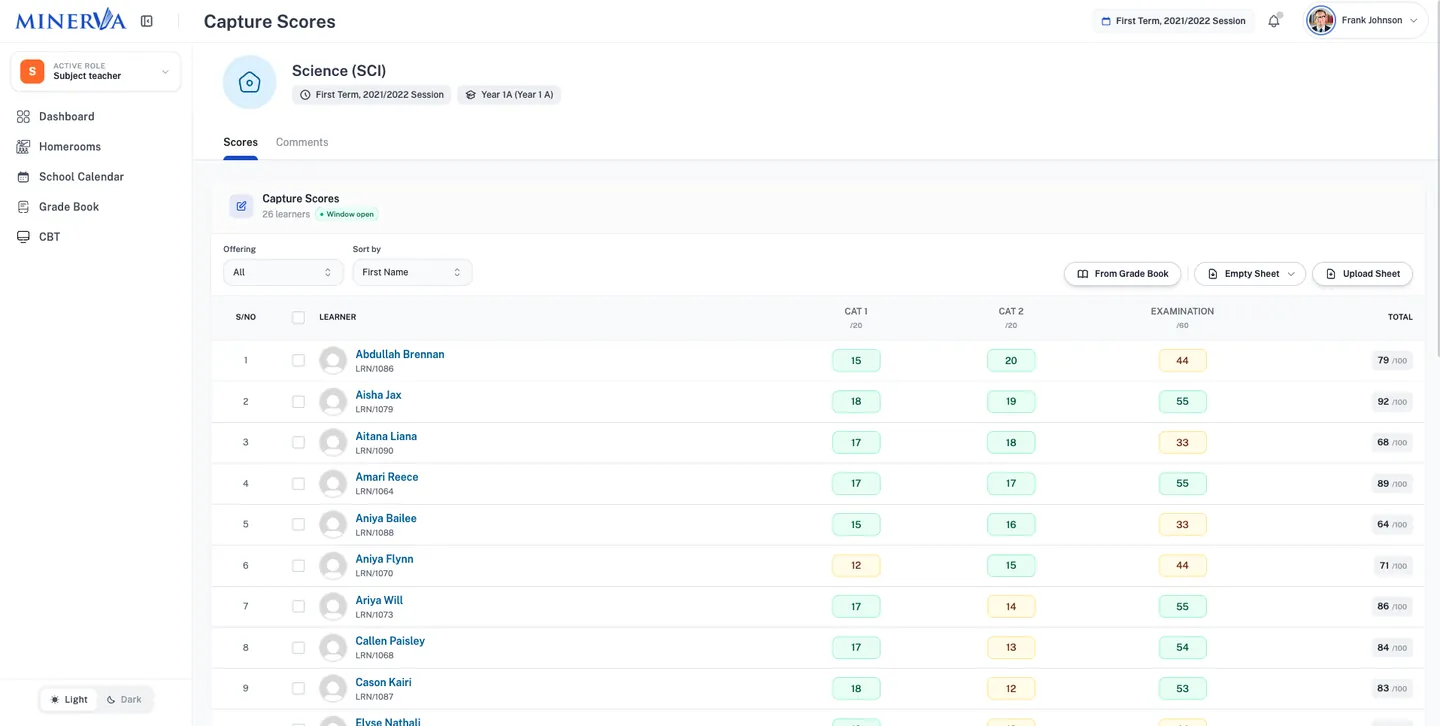
There's a particular kind of exhaustion that arrives at the end of every term, and it has a name: report cards. The scores are all in. That part's done. But turning them into finished, accurate, presentable results is a marathon of spreadsheets, manual addition, frantic cross-checking, and the quiet dread that somewhere a total is wrong and nobody's caught it yet.
For a lot of schools, the last week of term isn't teaching. It's arithmetic.
Where the time actually goes
It's rarely the marking that drains the days. It's everything after: adding up continuous assessment and exam scores by hand, working out averages and positions, fitting it all into the report template, then checking and re-checking because a single transposed digit means reprinting a child's entire card, and explaining yourself to a parent if it slips through.
That work is necessary, but almost none of it actually needs a human. It's exactly the kind of repetitive, error-prone computation that machines are good at and people are tired by.
Let the maths take care of itself
When scores go into one system, the totals, averages, grades and positions can compute themselves, instantly, and the same way every time. No adding columns by hand, no wondering whether two teachers ranked their classes by different rules. The numbers are simply correct, and they stay correct when a score is corrected.
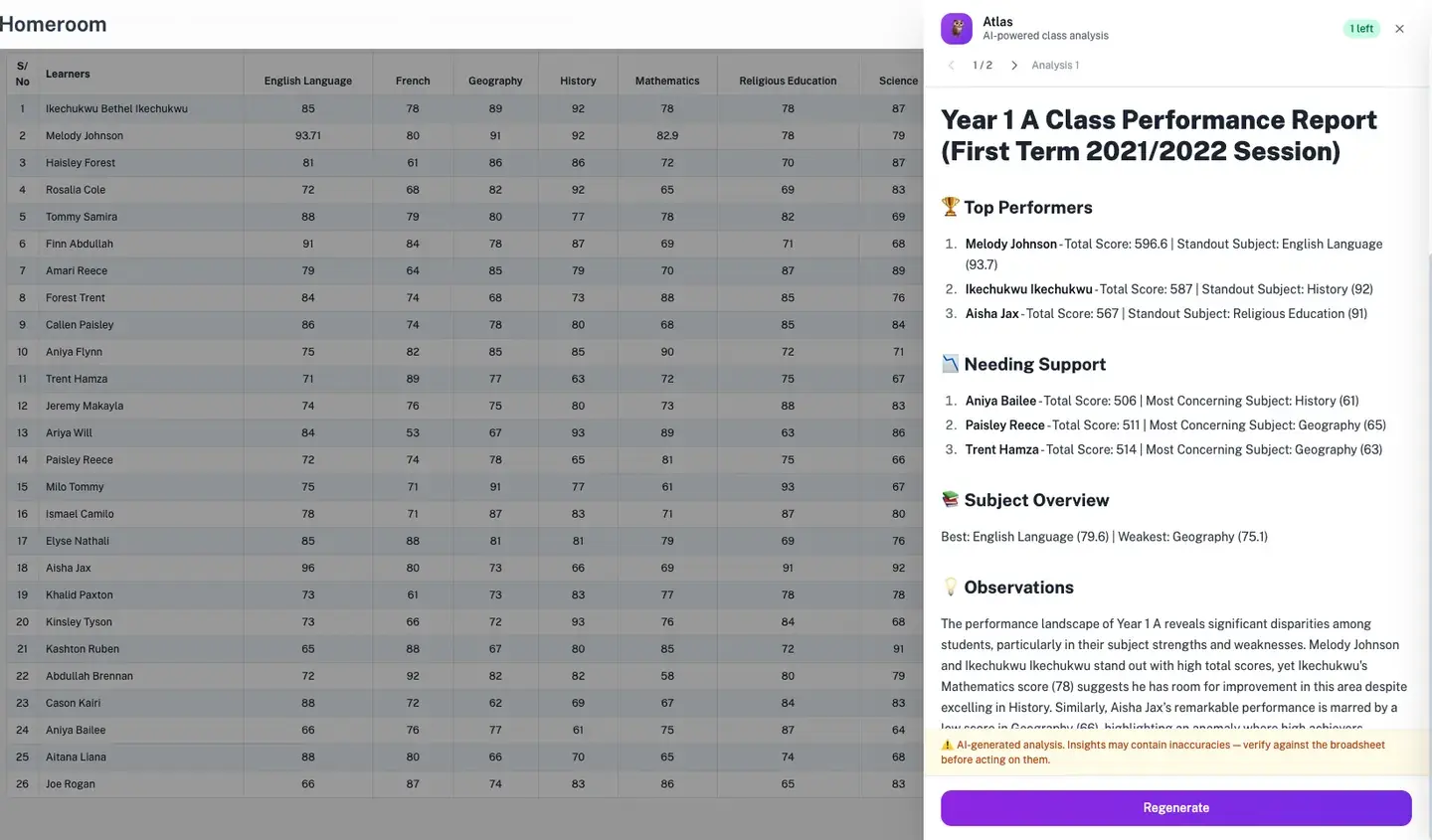
That alone collapses most of the end-of-term marathon. The week you used to spend computing becomes an afternoon spent reviewing.
Consistency you can trust
Beyond saving time, automation buys you something harder to value until you've lost it: consistency. Every card uses the same grading scale, the same calculations, the same layout. Parents across the school receive results that look and read as one school's work, not as the output of whichever teacher happened to format that batch. That polish quietly signals that the school is run well.
Comments without the copy-paste
Even comments, the part that genuinely should be human, get easier when the mechanical scaffolding is handled for you. With the totals and grades already in place, teachers can spend their attention on what to actually say about a child, rather than on the spreadsheet gymnastics around it.
Results going out accurate and on time is one of the clearest signals of a well-run school, and one of the most stressful to produce by hand. Minerva turns scores into finished report cards automatically, as part of one connected platform, with support from people who actually answer. If you'd like to see how your end of term could look, book a quick demo.
Similar posts
Best School Management Software for Nigerian Schools: A Straight Answer
Comparing school management software options in Nigeria, what actually separates them, and how to pick without wasting a term on the wrong system.
How Nigerian Schools Can Reduce Fee Defaulters
[object Object]
How to Collect School Fees Online in Nigeria (Without the Chaos)
[object Object]


See how Minerva works for your school
Book a free, no-obligation demo and we’ll show you how Minerva brings school operations, teaching and learning, parent engagement and student growth together in one connected platform.